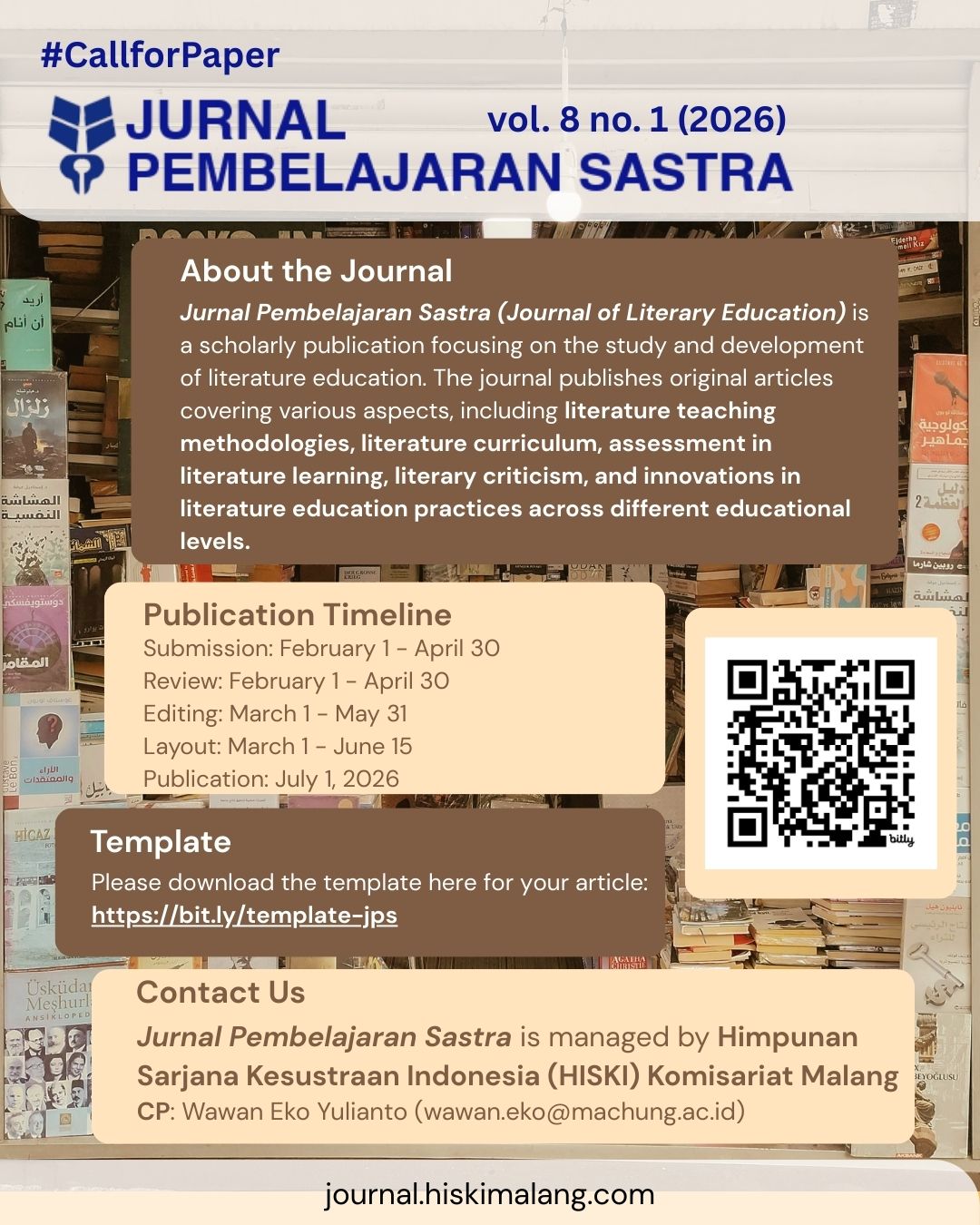
Call for Paper - Jurnal Pembelajaran Sastra Vol 8 No 1 (2026)
2026-02-01

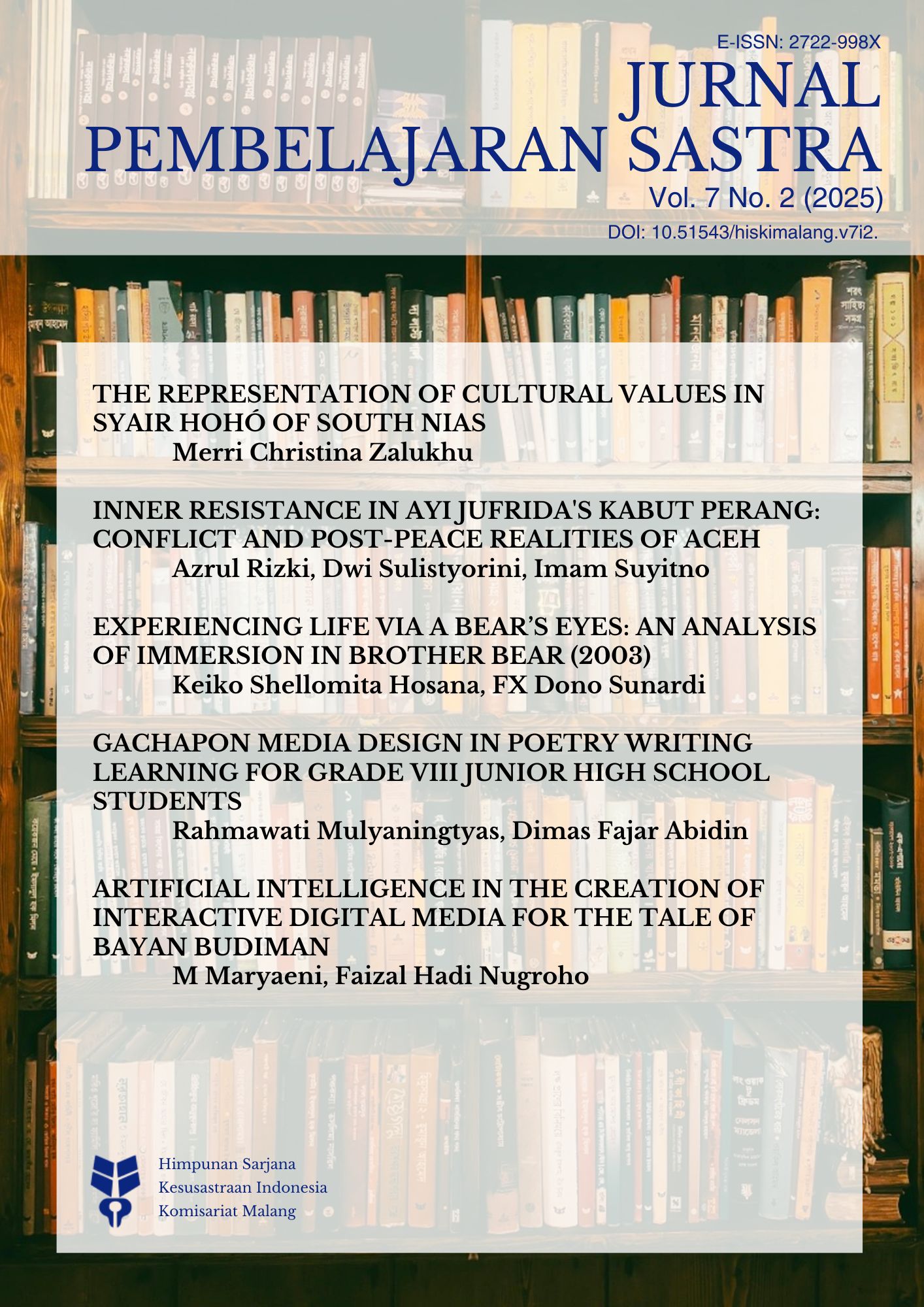
It's with great pleasure that we present the Journal of Literature Learning (Jurnal Pembelajaran Sastra), Volume 7, Number 2, is now presented to our esteemed readers. This edition features articles from various universities, including Nias Raya University, the State University of Malang, Ma Chung University, and the State Islamic University of Sayyid Ali Rahmatullah Tulungagung.
This issue presents six articles representing a diverse range of studies in language, literature, culture, and education. Generally, these articles demonstrate how texts, cultural practices, and learning media serve as vital spaces for understanding cultural values, social experiences, and the dynamics of knowledge transformation in the contemporary era. Utilizing diverse approaches—from folklore studies and literary analysis to film studies and pedagogical innovation—this edition illustrates how humanities research continues to evolve in interpreting the cultural and social phenomena of society.
"The Representation of Cultural Values in Syair Hohó of South Nias" This study examines the oral traditions of the South Nias community as a medium for transmitting cultural values and collective memory. Using an interpretative approach to the Hohó Mesozokhö Bu’ulölö text, the research shows that the narrative structure, lexical choices, and characterization of ancestors represent core values such as ancestral respect, human-nature relationships, customary leadership, bravery, kinship solidarity, and spirituality. These findings reaffirm the role of oral tradition not only as an aesthetic expression but as a crucial tool for maintaining cultural identity.
"Ritual Structure and Social Function of the Pangrukat Rain Prayer in the Religious Folklore Tradition of Pamekasan, Madura" This article highlights religious folklore practices still preserved in Maduranese society. Analyzing the structure and social function of the pangrukat prayer text through William R. Bascom's folklore framework, the study finds that the ritual consists of an opening, body, and closing. Functionally, the ritual serves to validate cultural institutions, provide religious and social education, and act as a mechanism for norm supervision. The study illustrates how traditional rituals function as media for cultural transmission and social cohesion.
"Inner Resistance in Ayi Jufrida's Kabut Perang: Conflict and Post-Peace Realities of Aceh" This research explores the representation of internal conflict in the novel Kabut Perang, set against the backdrop of the Aceh conflict and post-peace social realities. Through a qualitative approach, the study identifies various forms of internal character conflict, including moral dilemmas, guilt, doubts in the struggle, and the tension between loyalty and betrayal. It demonstrates how literature serves as a space for reflection on historical experiences and social trauma.
"Experiencing Life via a Bear’s Eyes: An Analysis of Immersion in Brother Bear (2003)" This article presents an analysis of the animated film Brother Bear, focusing on immersion and character transformation. By studying the development of the character Kenai, the research shows how the shift in perspective from human to bear builds cross-species empathy and reveals the spiritual bond between humanity and nature, ultimately affirming the possibility of harmony and reconciliation.
"Gachapon Media Design in Poetry Writing Learning for Grade VIII Junior High School Students" Offering a creative approach to pedagogy, this study explores poetry writing through "Gachapon" game media that generates random vocabulary. This media proved capable of stimulating student imagination and helping them overcome hurdles in idea generation and diction selection during the creative process.
"Artificial Intelligence in the Creation of Interactive Digital Media for the Tale of Bayan Budiman" This final article explores the use of AI in developing digital learning tools for the Bayan Budiman folklore. The research indicates that AI technology can assist teachers in producing interactive multimodal media while opening critical discussions regarding the ethical aspects of AI in education.
Overall, these six articles demonstrate that the study of language, literature, and culture is not confined to textual analysis alone; it plays a vital role in understanding cultural practices, social experiences, and pedagogical innovations amidst technological shifts. We hope this edition contributes to the development of humanities studies that are more contextual, reflective, and relevant to the dynamics of our time.
Regards.
 |
 |
 |
 |